
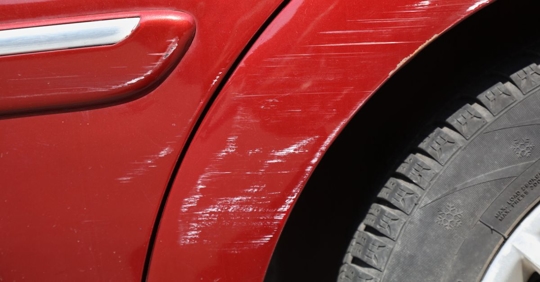
Many people think that if a car accident happens at a slow speed — for example, in a parking lot, at a stop light, or during a slow city-street rear-end collision — then there’s little risk of serious injury. But nothing could be further from the truth. Even “low-speed” crashes often involve sudden jolts and abrupt shifts that can cause serious harm to the human body.
Why “Low-Speed” Doesn’t Mean “Low Risk”
When two vehicles collide, it’s not simply the miles per hour that matters: it’s how quickly and violently your body moves relative to the car. In a rear-end crash — even if the striking car was only going 5–15 mph — the struck vehicle can be shoved forward suddenly. Your torso moves with the seat, but your head and neck don’t. That mismatch in motion can result in a rapid acceleration-deceleration of your head and spine, often resulting in whiplash, back strain, or other soft tissue injuries.
Modern cars are designed with crumple zones, airbags, and reinforced frames — but these features are optimized to protect occupants in high-speed collisions. In slow-speed crashes, these safety systems may not fully deploy, meaning much of the force is transferred directly to the occupants inside the vehicle.
Additionally, many low-speed collisions occur without warning — people aren’t braced, and their muscles are relaxed — which leaves the body more vulnerable to injury.
Common Injuries After Low-Speed Crashes
Here are some of the most common — but potentially serious — injuries following a low-speed automobile accident:
- Whiplash and neck injuries — Sudden jerking motion can stretch or tear muscles, ligaments, or tendons in the neck. Victims may experience pain, reduced range of motion, headaches, or dizziness.
- Back strain, spinal problems, and herniated discs — Abrupt jerks and pressure on the spine can lead to disc herniations, nerve irritation, or misalignment, which often cause pain, numbness, or weakness in the back or limbs.
- Concussions or traumatic brain injuries (TBI) — Even without direct impact to the head, the brain can shift inside the skull when the head snaps forward and back, potentially leading to concussions, memory issues, dizziness, or other serious neurological problems.
- Soft tissue damage in shoulders, knees, hips, or other joints — In some cases, bracing for impact (or being thrown against part of the interior) can injure joints or soft tissue elsewhere in the body.
- Delayed onset of symptoms — Many people walk away thinking they’re fine, then hours or even days later begin experiencing stiff necks, headaches, back pain, or neurological symptoms as adrenaline subsides and inflammation sets in.
Because of this, a collision that seems “minor” or resulted only in cosmetic vehicle damage can still lead to serious and long-lasting injuries.
Why Low-Speed Accident Claims Can Be Challenging
Insurance companies and at-fault drivers often downplay low-speed collisions. They may argue that because the vehicles show little damage, the occupants can’t be seriously injured. That assumption ignores how the human body responds to sudden deceleration and ignores the possibility of hidden injuries such as soft tissue damage or concussions.
Even medical imaging, such as X-rays, can fail to detect soft tissue or ligament injuries. That means you may need additional medical documentation, ongoing treatment, or expert medical testimony to prove that the collision caused real harm.
From a legal standpoint, what matters is not how fast the cars were going but how severely you were hurt, and how the crash affected your life.
The Importance of Prompt Medical Attention
If you’ve been in a low-speed car accident, don’t assume “we were just creeping along, I’m fine.” Protect your health by:
- Getting a full medical examination, even if you feel okay at first.
- Documenting every symptom, even if it seems minor, such as neck stiffness, headaches, dizziness, tingling, or low back pain.
- Following through with all recommended treatments (examples including therapy, chiropractic care, diagnostic scans, and rest, etc.). Without consistent medical evidence and treatment, it can be much harder to show the true extent of your injuries.
Low-Speed Crashes Happen, and They Can Be Serious in Missouri
At Aaron Sachs & Associates, P.C., we’ve seen firsthand how crashes that appear “minor” can cause life-changing injuries — and still warrant serious legal claims. In Missouri, someone injured in a seemingly low-speed collision may still be entitled to compensation for medical bills, pain and suffering, lost wages, and more — depending on the facts of the crash and how strongly the injuries are documented.
If you or a loved one has been involved in a low-speed crash — even with little to no visible damage — you don’t have to navigate this alone. Our team can help you understand your rights, gather evidence, and pursue the compensation you are entitled to.
Contact us today for a free consultation — because “slow and minor” doesn’t always mean “safe.”